Offset vs. Digital Printing: Which One Saves You Money at Your Volume?
The crossover point where offset becomes cheaper, the four situations where quantity stops mattering, and what to choose for each product.
Someone at the print shop asks whether you want offset or digital, and the honest answer for most people is that they have no idea, because nobody has ever explained what changes.
Here is what changes: at the wrong volume, one of these methods costs you several times more than the other for a physically identical result. That is the entire decision. Not quality, not prestige, not what sounds more professional. Volume.
This guide gives you the threshold, the exceptions to the threshold, and the four situations where quantity stops mattering entirely.
The one difference that explains everything
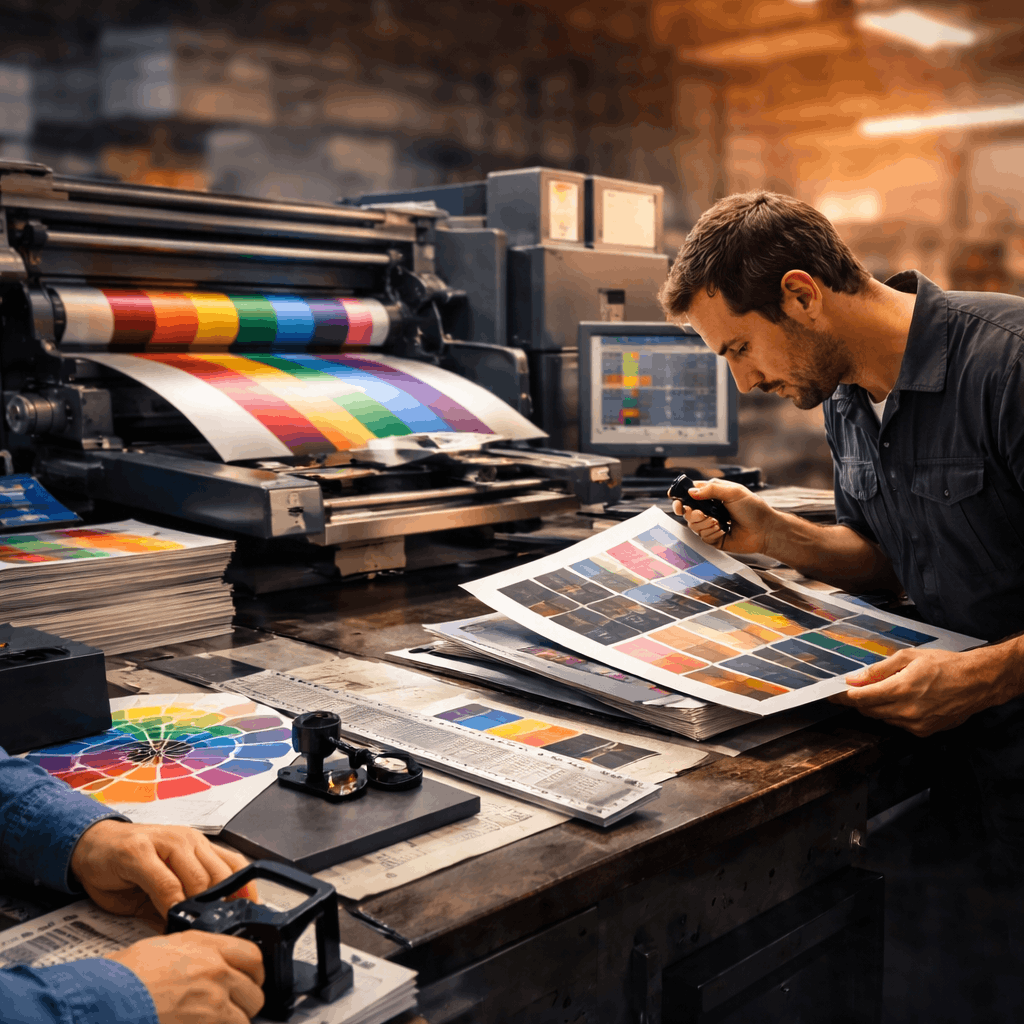
Offset printing makes a plate. Your artwork is burned onto a metal plate for each colour, the plate is mounted on the press, ink transfers from plate to rubber blanket to paper, and the press is brought up to colour. That preparation happens once, costs the same whether you print 500 sheets or 50,000, and then every additional sheet costs almost nothing.
Digital printing makes no plate. The file goes to a press that lays down toner or inkjet ink directly, like an industrial-grade office printer built to commercial standards. There is nearly no setup, so the first sheet is cheap. But the hundredth sheet costs the same as the first, and so does the ten-thousandth.
That is the whole economic story. Offset carries a fixed cost that gets diluted. Digital carries a per-piece cost that never falls.
Where the two lines cross
Plot cost per piece against quantity and you get two lines. Digital is flat. Offset starts far above it and drops steeply. They cross somewhere, and that crossing point is the only number you actually need.
For most commercial print, the crossover sits between 500 and 1,000 units.
It moves depending on the job:
| What shifts the crossover | Which way it moves |
|---|---|
| More ink colours, or spot colours | Later. Each colour needs its own plate, so offset setup grows |
| A single colour, or black only | Earlier. Fewer plates means cheaper setup |
| Large sheet size or many pages | Earlier. Offset presses run big sheets and gang multiple pages per plate |
| Small, simple item | Later. Digital handles short runs of simple items efficiently |
| Likely reprints of the same file | Earlier. Plates can be stored and reused, so the setup pays off twice |
The practical rules:
- Under 500 units: digital, almost without exception
- 500 to 1,000 units: genuinely ambiguous. Ask for both quotes
- Over 1,000 units: offset, unless one of the exceptions below applies
- Over 5,000 units: offset is not close. The gap becomes large
If your printer will not quote both ways in the ambiguous band, that tells you something. A shop that owns both presses has no reason to steer you.
The four times quantity stops mattering
Sometimes the method is decided before you count anything.
1. You need exact brand colour. Offset can print true Pantone spot colours, meaning the ink is physically mixed to your colour before it touches paper. Digital simulates Pantone using process CMYK, which gets close but not exact, and struggles most with corporate blues, bright oranges, and anything metallic or fluorescent. If your brand guidelines specify a Pantone and legal or marketing will reject a near-miss, you are printing offset regardless of quantity.
2. Every piece needs different content. Variable data printing, meaning personalised names, sequential numbering, unique QR codes, individual addresses, or numbered event tickets, is digital only. An offset plate is a fixed image. It cannot change between sheets. This is the one capability digital has that offset cannot match at any price.
3. You need it today. Digital skips platemaking entirely, which is why same-day and 24-hour printing exists at all. Offset needs plates made and the press brought up to colour before the first good sheet comes off. (See typical turnaround times in Riyadh here).
4. The stock is unusual or the format is oversized. Offset handles a far wider range of paper weights, textured and uncoated stocks, and large sheet sizes. Heavy board, specialty papers, and oversized formats often simply will not run through a digital press.
Side by side comparison
| Feature | Offset | Digital |
|---|---|---|
| Setup | Plates required, one per colour | None |
| Cost at low volume | High per piece | Low per piece |
| Cost at high volume | Very low per piece | Unchanged per piece |
| Economical range | Roughly 1,000 units and up | Roughly 1 to 1,000 units |
| Spot & Pantone colour | True mixed inks | Simulated in CMYK |
| Variable data | Not possible | Core strength |
| Paper range | Very wide, including heavy stocks | More limited |
| Turnaround | 1 to 3 days production after plates | Same day to 3 days |
What to choose, by product
| Product | Typical answer | Why |
|---|---|---|
| Business cards, new hire | Digital | Quantity is tiny and turnaround matters |
| Business cards, full rollout | Offset | Volume clears threshold, brand colours must match |
| Flyers for a weekend campaign | Digital < 500, offset > 500 | Pure volume call |
| Corporate brochure, 500 copies | Ask for both | Page count pulls the crossover earlier |
| Event tickets with numbers | Digital | Variable data rules everything else out |
| Roll-up banners & signage | Neither | Large format is its own process (inkjet/UV) |
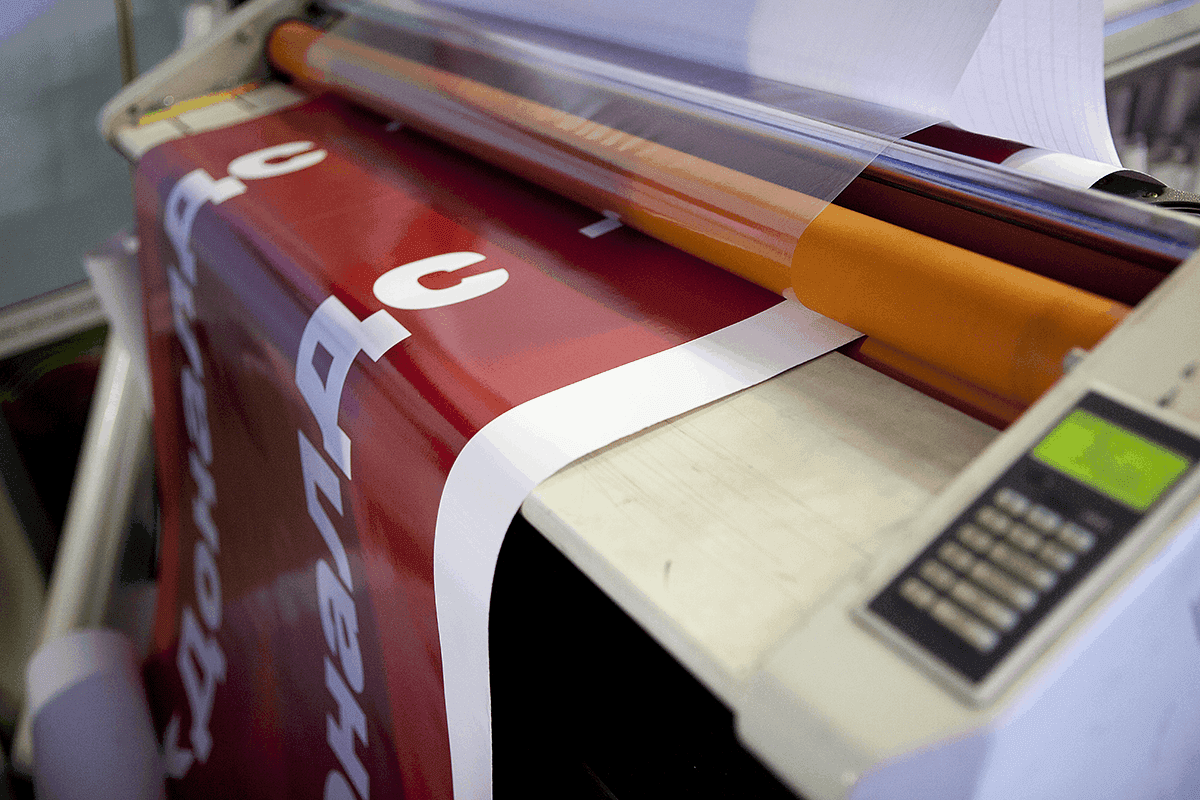
That last row matters more than people expect. Banners, backdrops, vehicle graphics, and building signage do not run on either press. They are printed on wide-format machines, usually UV or solvent inkjet, on vinyl or fabric rather than paper. If a supplier quotes your banner as "offset," they are brokering it out and do not know what they are selling.
The mistake that costs the most money
It is not choosing the wrong method. It is splitting one job into several small ones.
A company that orders 300 brochures four times a year pays digital rates four times, plus handling each time, plus the risk that batch three does not quite match batch one. The same 1,200 copies ordered once, offset, costs a fraction per piece and comes out of a single press run with identical colour throughout.
If your artwork is stable and the content will not date, consolidate. If you genuinely cannot predict demand, or the content changes every quarter, stay digital and accept the per-piece cost. That is a real trade-off, not a mistake. The mistake is defaulting to small repeat orders because it feels cautious.
Ask for the quote both ways
In the 500 to 1,000 band, request an offset quote and a digital quote for the same specification, then compare cost per piece rather than the total. The answer is often not the one you assumed, and it takes your printer about five minutes to produce.
Frequently asked questions
What is the difference between offset and digital printing?
Offset printing transfers ink from a metal plate to a rubber blanket and then onto paper, requiring one plate per colour and a setup cost that does not change with quantity. Digital printing applies toner or inkjet ink directly from the file with no plates and no setup. Offset gets cheaper per piece as volume rises. Digital stays roughly the same per piece at any quantity.
Is digital printing lower quality than offset?
Not for standard commercial work. Modern digital presses match offset on sharpness and process colour on coated stock. Offset retains a clear advantage for true Pantone spot colours, metallic and fluorescent inks, uncoated or textured stocks, and very long runs where colour consistency must hold across thousands of sheets.
Can digital printing match Pantone colours?
Only approximately. Digital presses simulate Pantone colours using CMYK process inks, which comes close but cannot reproduce them exactly, with the largest variance on corporate blues, vivid oranges, and metallics. Offset prints true Pantone using physically mixed ink, so brand-critical colour should go offset.
Which is faster, offset or digital printing?
Digital is faster for short runs because it skips platemaking, which is why same-day and 24-hour printing is always digital. Offset requires plates to be made and the press brought up to colour first, then typically runs 1 to 3 days in production, though it prints high volumes far faster than digital once running.
Not sure which one your job needs?
Send the specification, quantity, stock, and deadline, and Golden Arch Printing will quote it both ways where both are viable, with the cost per piece shown for each. If one method is clearly wrong for your job, we will say which and why.
Running both offset and digital in house means there is no incentive to push you toward whichever press happens to be free.
Request a quote → goldenarchprinting.com